A connected view
Turn user-facing indicators into a small set of checks with named owners and clear thresholds.
Read moreBuild useful service indicators, make alerts actionable and improve the handoff from observation to response with clear reference material.
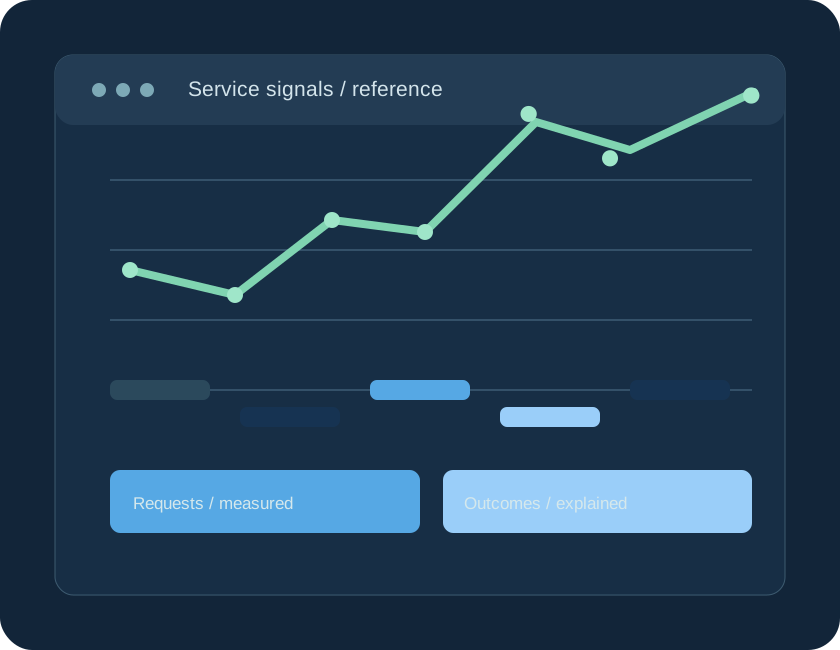
A useful monitoring practice begins with the outcome someone is waiting for. Uptime, request latency and failed work are meaningful because they describe a user experience, not because they fill a dashboard.
Infrastructure numbers help explain a failure. They should not be mistaken for proof that a service is healthy.
Turn user-facing indicators into a small set of checks with named owners and clear thresholds.
Read moreLearn when to observe availability, latency, errors and saturation, and how to define measurements.
Read moreKeep a practical response note near the signal so the first decision is not made under pressure.
Read moreThe budget lab uses numbers you enter. It does not fetch production metrics, create an account or report your input to a remote service.
This section explains a specific part of the published reference. Test the behaviour in a controlled setting and keep the result separate from the original assumption. A clear explanation identifies the affected request or interaction, the expected outcome and the observation that would show a difference. Read the related pages to understand how this detail connects to the larger subject without implying an untested service or a commercial claim.
Open budget lab